
Review · SOVIET ESTONIA TOURS
Soviet Tallinn: Cold War Echoes Behind the Iron Curtain Tour
Soviet Tallinn feels normal until it doesn’t. This 3-hour walking tour in Harju takes you through medieval lanes, hilltop viewpoints, and Soviet-era monuments while your guide connects the history to real human choices and real consequences. I especially like how the story reaches beyond talking points and lands on the places where the city literally absorbed the Cold War.
Two things I really like: the family-tied storytelling that makes occupation feel personal instead of abstract, and the way you see the KGB prison cells area and other surveillance clues as part of a system, not just spooky trivia. In one booking, the guide named KJ was singled out for being both sharp and careful, and that matches what the format demands.
One drawback to consider: this is heavy history. You cover war damage, deportations, political persecution, and censorship, and the route includes some stairs, slopes, and Old Town cobblestones, so it can feel like a lot on an already busy day.
In This Review
- Key Points You Should Know Before You Go
- The Cold War Story Starts in Medieval Streets
- 1944 Bombing and the Hidden Epilogue You’ll Want to Discuss
- Freedom Square, Toompea Hill, and the Moment Ideas Got Dangerous
- St Nickolas and St Olaf’s Church Stops, and Why Religion Matters Here
- KGB Footprints, Surveillance Logic, and What You Learn When You See the Cells
- Brutalist Monuments and 1980 Olympics Facades That Lied on Purpose
- The Russian Embassy Protest Site and the Long Shadow of Aggression
- The 1994 Estonia Ferry Memorial and Unanswered Questions
- Leaving the Past at the Sea: From Barbed Wire to Public Space
- Price and What You Actually Get for $131
- Logistics That Affect Your Comfort (More Than You Think)
- Who This Tour Fits Best
- Should You Book Soviet Tallinn: Cold War Echoes Behind the Iron Curtain?
- FAQ
- How long is the Soviet Tallinn tour?
- What is the price per person?
- Is this a private tour?
- What language is the guide speaking?
- How far do you walk?
- Where does the tour start?
- Does the tour include church visits and viewpoints?
- Are there sites tied to the KGB?
- Is the tour wheelchair accessible?
- What should I bring?
Key Points You Should Know Before You Go
- Start in the medieval Old Town, then watch the timeline tighten around the 1944 Soviet carpet bombing that devastated Tallinn.
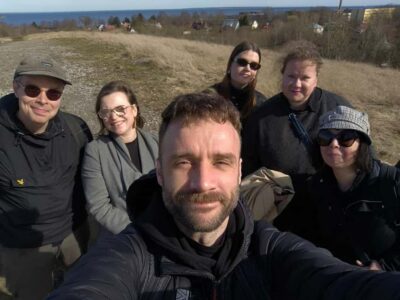
- Hear candid family stories from a native Estonian guide, including the raw, sometimes absurd day-to-day realities of life under Soviet rule.
- Reach the viewpoint-rich Toompea Hill area, where the Singing Revolution story turns ideas into a mass movement that pressured Soviet power.
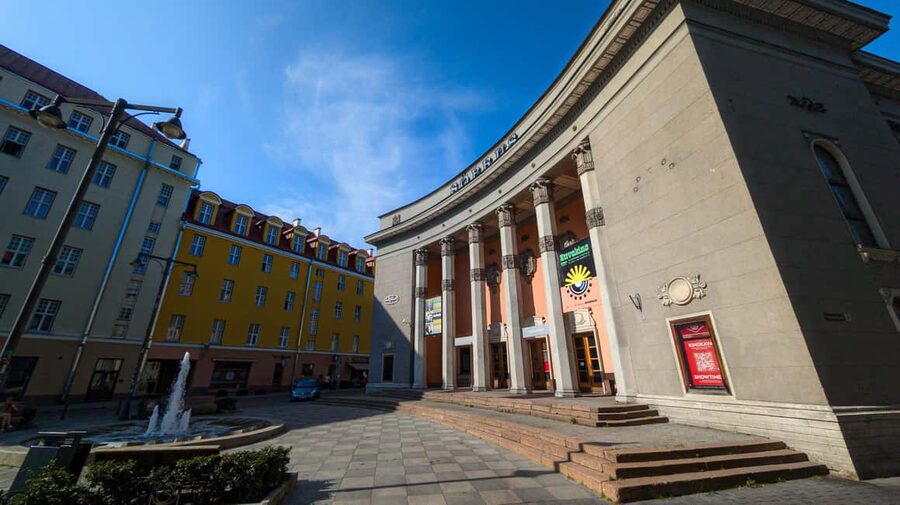
- See the architecture of control, including the last surviving Stalinist and Soviet brutalist monumental buildings, plus Olympic-era façades meant to hide rot.
- Walk past Cold War enforcement traces, including the KGB Prison Cells and the logic behind surveillance and imprisonment.
- Finish near the sea, a symbolic shift from militarized border zone to a public space reclaiming freedom.
The Cold War Story Starts in Medieval Streets
Tallinn’s Old Town looks sturdy, almost timeless. That is exactly why this tour hits. You begin in the medieval area and get a quick sense of how the city’s shape and streets helped it endure, then your guide tightens the focus to 1944, when Soviet bombing reduced half the city to smoking rubble and left up to half of Tallinn’s population homeless.
I like the pacing here because it prevents the story from turning into a list. Instead, you’re standing where events happened, and you’re getting the practical meaning of what bombing does to a community, not just how it changed maps.
If you’re expecting a museum vibe, you’ll do better if you come as a walker with questions. The tour is private, so it’s built for back-and-forth. One group booking praised a setup with five people as a sweet spot for asking lots of questions, and that makes sense for this kind of topic.
More left over from the occupation years:
1944 Bombing and the Hidden Epilogue You’ll Want to Discuss
One of the most striking parts of the tour is how it treats the night of 1944 bombing as both tragedy and turning point. You’ll stand at or near key Old Town locations tied to that destruction and hear how the bombing unfolded and what it meant for families trying to survive the aftermath.
What makes this more useful than a standard overview is the emphasis on an epilogue, described as a little-known aftermath that can coexist with incredible luck and terrible tragedy. That framing matters. When a city suffers that level of damage, it’s easy to talk only about numbers. Your guide works to show the human texture of what survived, what was lost, and what people were forced to do next.
Practical note: this is not a walk where you can easily tune out. Even if you’ve read about Soviet occupation before, the guide’s family-connected perspective changes the tone, and you’ll likely find yourself mentally comparing what you knew with what you’re seeing on the street.
Freedom Square, Toompea Hill, and the Moment Ideas Got Dangerous
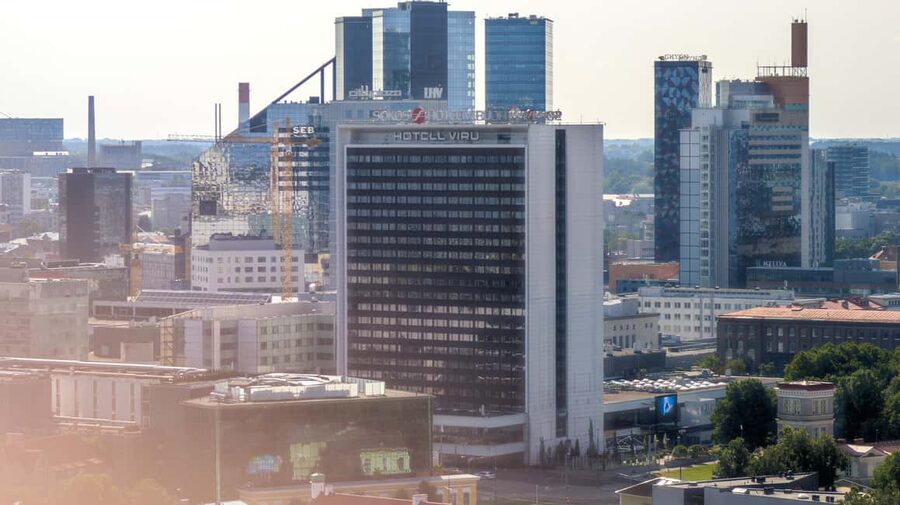
From the Old Town, the tour pushes you toward Toompea Hill and the political gravity that sits above the city. The route includes stops that set the stage for how Estonia’s resistance grew during the late Soviet years, culminating in what’s often called the Singing Revolution.
This is where the tour’s title makes sense. Your guide connects the big emotion of protests and songs to geography and pressure points. You’ll learn about the world’s largest peaceful mass protest starting right here, and then you’ll move toward the razor-edge tension of 1991, when Soviet special forces nearly turned Tallinn into a war zone.
I like that you don’t only get the inspiring version of events. You also get the risk calculation. Peaceful mass action is powerful, but it still lives in a world with tanks, KGB, censorship, and fear. The tour makes that contrast clear without losing momentum.
Also, expect multiple photo stops with panoramic viewpoints. Patkuli Viewing Platform and Kohtuotsa viewing platform are both part of the experience, and they’re not just for pictures. They help you “read” the city as a stage for politics, communications, and control.
St Nickolas and St Olaf’s Church Stops, and Why Religion Matters Here
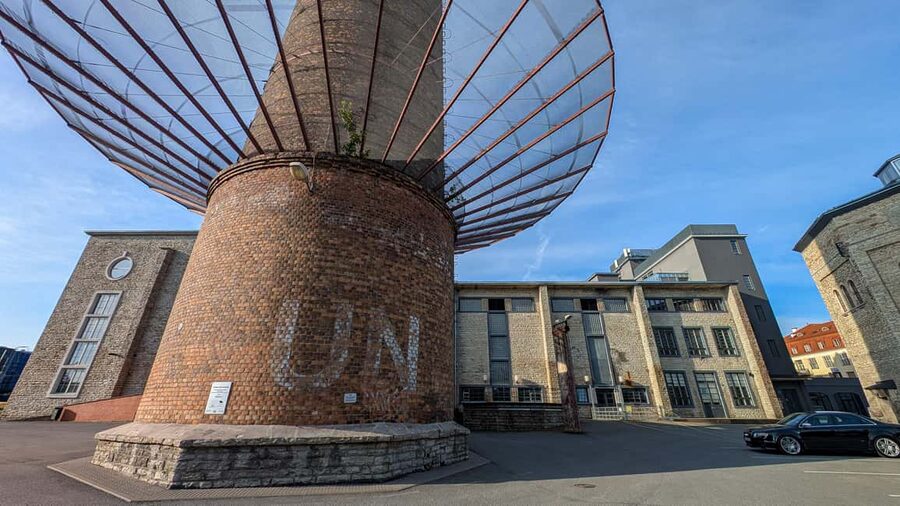
The itinerary includes a guided visit at St Nickolas Church and then later, another guided segment at St Olaf’s Church. These stops aren’t framed as religious tourism. They help anchor the story in a place where different powers and cultures overlapped, often uneasily, over time.
In practice, churches act like landmarks for memory. Standing in and around them gives you a sense of continuity while the tour explains what Soviet rule tried to do to public life. Even if your interest is mainly Cold War history, you get a better feel for how Estonians kept identity visible while official narratives tried to suppress independent thinking.
One more visual bonus: the tour also includes seeing Alexander Nevsky Cathedral. It’s part of the Soviet-era political atmosphere of influence and symbolism, so it pairs well with Freedom Square and the hilltop viewpoints. Together, these stops show how architecture can represent power even when it looks like just another building.
KGB Footprints, Surveillance Logic, and What You Learn When You See the Cells
A tour titled Soviet Tallinn should deliver on the KGB side, and it does. You pass the KGB Prison Cells and you hear how surveillance and imprisonment worked in everyday life. The tour notes things like bugged hotel rooms, total surveillance, and soundproofed prison cells that muffled victims’ cries.
That last detail is the kind of point that makes a room feel smaller when you imagine it as a system. It’s not just that people were arrested. It’s that the system was designed to make resistance hard and to limit the ability of others to hear, intervene, or even confirm what was happening.
This is also where you’ll feel the guide’s balance of bleak and bizarre. The tour explicitly mentions the surreal and absurd quirks of daily Soviet life. That is not meant to soften the cruelty. It’s meant to explain how authoritarian systems distort normal routines until people adapt in ways that feel both tragic and, at times, darkly ironic.
If you dislike hearing about imprisonment or political persecution, this is the portion where you’ll want to be mentally prepared.
Brutalist Monuments and 1980 Olympics Facades That Lied on Purpose
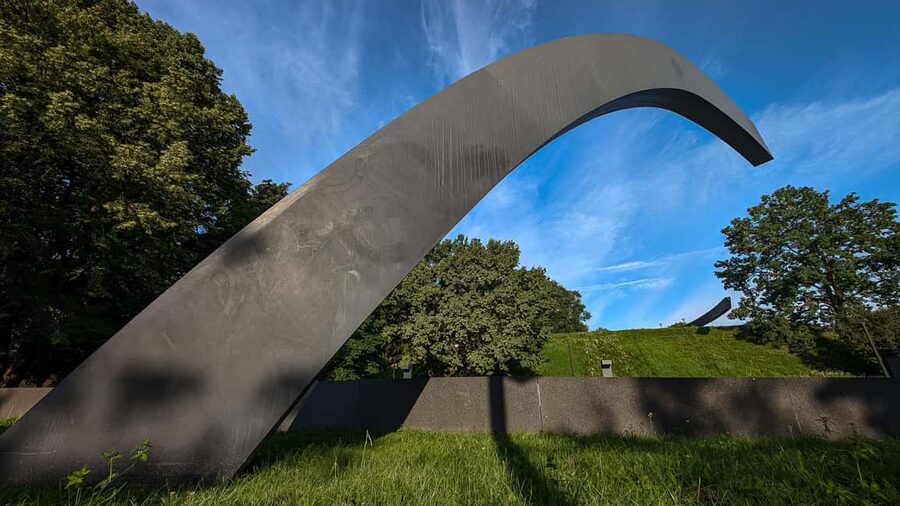
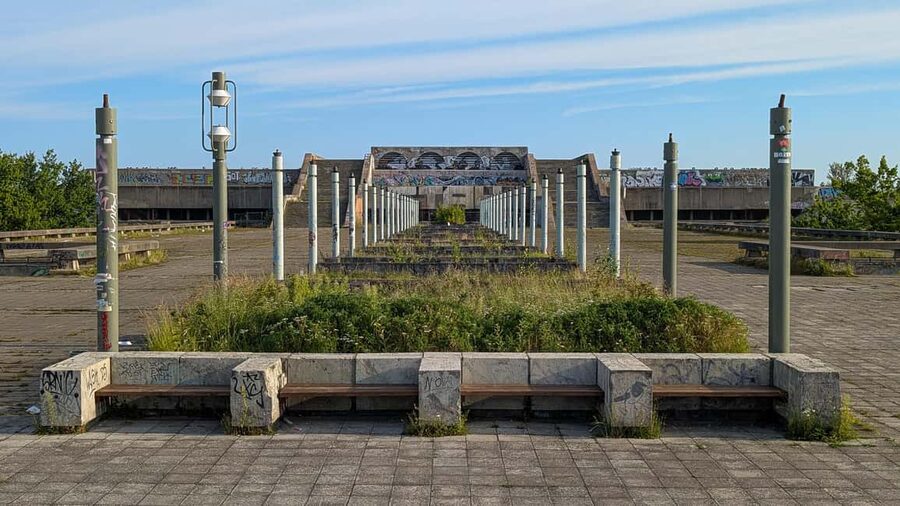
Soviet Tallinn isn’t only about damage and repression. It also shows you the architecture of performance. The tour includes seeing the last surviving Stalinist and Soviet brutalist monumental architecture, and it explains how these buildings doubled as iconic film sets for both Hollywood and Soviet productions.
You’ll also hear about the Potemkin-like facades built for the 1980 Olympics, a surface illusion designed to hide internal decay. That concept is especially important here because it teaches you how propaganda behaves in the physical world. The façade isn’t just on posters. It shows up in the built environment, in what the authorities wanted visitors and outsiders to think they were seeing.
One practical benefit of this section is how it changes your city-walking lens. After you connect the buildings to their political purpose, you start noticing details you would otherwise pass without thought.
Outside the wall, and still the same day:
- Tallinn: Guided Old Town Historical Walking Tour★ 4.9 · 956 reviews
- From Tallinn: Day Trip to Lahemaa National Park★ 4.9 · 636 reviews
- Tallinn: City Sightseeing Hop-On Hop-Off Bus Tour★ 3.9 · 430 reviews
- Tallinn: Private Walking Tour with a Local★ 4.7 · 411 reviews
- Guided Old Town Tallinn Historical Walking Tour★ 5.0 · 395 reviews
The Russian Embassy Protest Site and the Long Shadow of Aggression
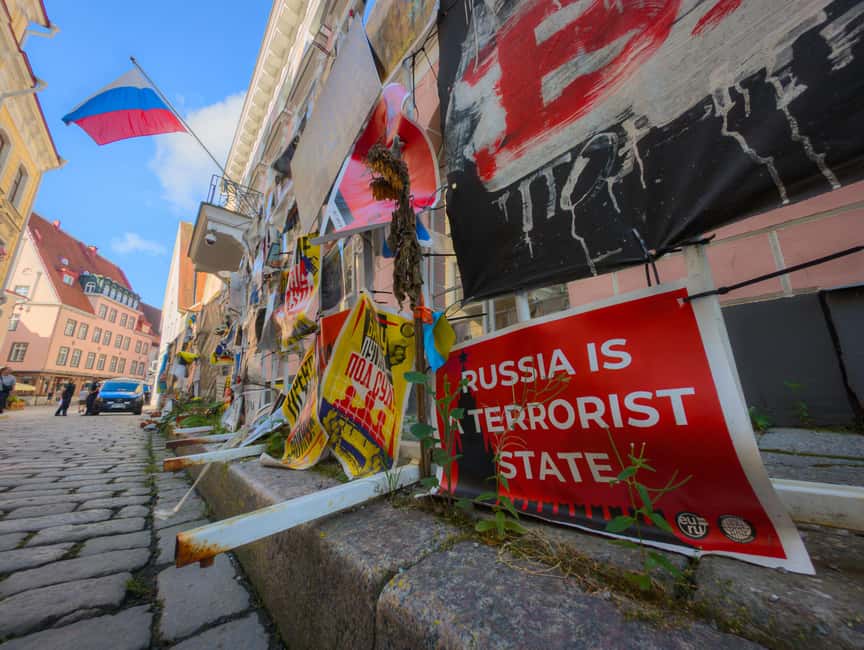
The tour includes seeing the Russian embassy, now used as a permanent protest site against not just Ukraine’s invasion, but decades of earlier aggression, annexations, and assassinations.
I appreciate how this is handled as a continuation of history rather than a sudden jump to headlines. The point for you as a visitor is to understand that Cold War narratives did not vanish. They evolved into later conflicts, and the emotions around those events are still present in public space.
Even if you’re only in Tallinn for a short time, this stop helps you connect the occupation era to the broader political reality that Estonians experience now.
The 1994 Estonia Ferry Memorial and Unanswered Questions
The route includes a memorial linked to the 1994 Estonia ferry disaster, described as Europe’s deadliest peacetime maritime tragedy since World War II. The tour adds an extra layer that you might not get elsewhere: it highlights still-unanswered questions and includes the presence of rumors of Russian military involvement.
Memorial stops can sometimes feel like a hard stop, but here it’s used as a prompt to think about uncertainty after catastrophe. When information is controlled or credibility is contested, even tragedy can become politically complicated.
This is also a respectful moment. You’re encouraged to reflect on the scale of loss and the lingering gaps in understanding.
Leaving the Past at the Sea: From Barbed Wire to Public Space
The experience ends approximately 750 meters outside the Old Town, and the theme shifts symbolically toward the sea. The tour explains that the coast area was once a closely guarded militarized border zone with barbed wire and high walls, and now it’s a public space reclaiming freedom.
This finish matters more than you’d expect. After standing in places tied to bombing, deportations, and surveillance, the final shift to the shoreline helps you feel a “before and after” in a physical way, not just as a timeline.
If you’re the type who likes to end a tour with an easy next step, you’re set up well for wandering on your own from there, rather than being trapped in a tight schedule.
Price and What You Actually Get for $131
At $131 per person for a 3-hour private tour, you’re paying for three things: a native English-speaking guide with personal family ties, a walking route that covers multiple major story sites, and a format built for explanation and questions.
It’s not just “see these places.” The price is for interpretation: propaganda, censorship, surveillance, political persecution, and the Singing Revolution, tied directly to where you’re standing. Add in the inclusion of key stops like St Nickolas Church, Freedom Square, Alexander Nevsky Cathedral, St Olaf’s Church, Linnahall photo stop, KGB Prison Cells passing area, plus the viewpoint platforms, and you get a lot of ground covered in a manageable time.
Value also comes from the private setup. This is the kind of tour where you’ll get more out of it if you can ask follow-ups. One booking highlighted how a small group size, five people, made it easier to get answers to everything they wanted to know.
If you’re traveling solo and prefer structured history with human detail, the “private group” approach can feel like a good match instead of a rigid lecture.
Logistics That Affect Your Comfort (More Than You Think)
This is a 3.5 km route with stairs and slopes, mostly flat and even, but Old Town streets include medieval cobblestones. If you have mobility concerns, the tour notes the route can be adapted if you tell them in advance.
Weather in Estonia can change fast, so bring rain gear if the forecast looks uncertain. And because the tour includes several photo stops and viewpoint moments, comfortable shoes matter. You want to walk well so you can listen well.
Who This Tour Fits Best
This tour is ideal if you want Soviet-era Tallinn explained through lived experience, not just dates and dates. The guide’s family stories are a core part of the value, and they give the tour its emotional accuracy.
It also fits history-minded travelers who like their facts connected to place: bombing sites, monuments, and surveillance-linked locations all make more sense when you see them in context.
If you’re not comfortable with heavy topics, or you prefer a lighter, more casual city walk, this one might feel intense. You can still enjoy Tallinn’s sights, but this specific tour is built for truth, including the parts many visitors would rather skip.
Should You Book Soviet Tallinn: Cold War Echoes Behind the Iron Curtain?
I think you should book if you want the kind of Tallinn tour that changes how you read the city. You’ll come away with a clearer sense of how 1944 violence reshaped Tallinn, how Soviet rule worked through censorship and surveillance, and how Estonians pushed back through ideas during the Singing Revolution.
Book it sooner if:
- you like guided history that uses personal stories as evidence
- you want both architecture and political context
- you can handle difficult topics without needing the story softened
Skip it or choose a different style if:
- you want purely scenic sightseeing
- you struggle with stairs and cobblestones
- you’d rather avoid discussions of war crimes, imprisonment, and deportations
If you do book, wear real walking shoes, bring rain protection, and arrive ready to ask questions. This tour rewards attention, and it gives you something better than a photo. It gives you a way to understand what you’re looking at.
FAQ
How long is the Soviet Tallinn tour?
The tour lasts 3 hours.
What is the price per person?
The price is $131 per person.
Is this a private tour?
Yes, it is a private walking tour.
What language is the guide speaking?
The live tour guide speaks English.
How far do you walk?
The route is about 3.5 km.
Where does the tour start?
You can start either in front of the Tallinn Tourist Information Centre on Niguliste 2, or from your hotel anywhere in Tallinn’s Old Town.
Does the tour include church visits and viewpoints?
Yes. It includes guided visits such as St Nickolas Church and St Olaf’s Church, plus photo stops and guided segments at viewpoints like Patkuli and Kohtuotsa.
Are there sites tied to the KGB?
Yes. The tour includes the KGB Prison Cells area as a passing stop.
Is the tour wheelchair accessible?
Yes, it is wheelchair accessible. The tour can adapt the route, distance, and pace if you let them know in advance about serious mobility issues.
What should I bring?
Wear comfortable shoes. Since Estonia weather can change quickly, bring an umbrella or rainproof clothing if rain seems likely.
Latest to appear in Tallinn
- Private 2.5-Hour Tour of Tallinn Old Town in a Spacious Mercedes Minivan
★ 5.0 · 1 review - Private Transfer from Tallinn to Riga and Stopover at Turaida
★ 5.0 · 1 review - Two Countries in One Day: Day Trip from Riga to Tallinn
★ 5.0 · 1 review - Guided Tallinn Old Town Winter Walking Tour
★ 5.0 · 1 review - Estonian Gingerbread Workshop in Tallinn’s Old Town
★ 5.0 · 1 review - Enchanted Tallinn: Private Christmas Walking Tour with Piparkook
★ 5.0 · 1 review - Tallinn: 24-Hour City Bike Rental
★ 5.0 · 1 review - Tallinn singing grounds: story of bees that broke the empire
★ 5.0 · 1 review
Soviet Estonia Tours, compared.
Coastal Cliffs and Rummu Submerged Quarry Day Tour
Read our review →
Small-Group Half-Day Tour of Rummu and Coastal Cliffs
Read our review →
Soviet Walking Tour of Tallinn: Explore the City’s Hidden History
Read our review →
Behind the Iron Curtain Soviet Secrets Guided Tour
Read our review →
Coastal Cliffs, Paldiski & Rummu Quarry Day Tour
Read our review →
Half-day Ancient Ruins and Castles: Von Glehn Park, Padise, Rummu
Read our review →Tour of Tallinn Old Town and visit to The Seaplane Harbour
Read our review →Browse the lists this tour appears in